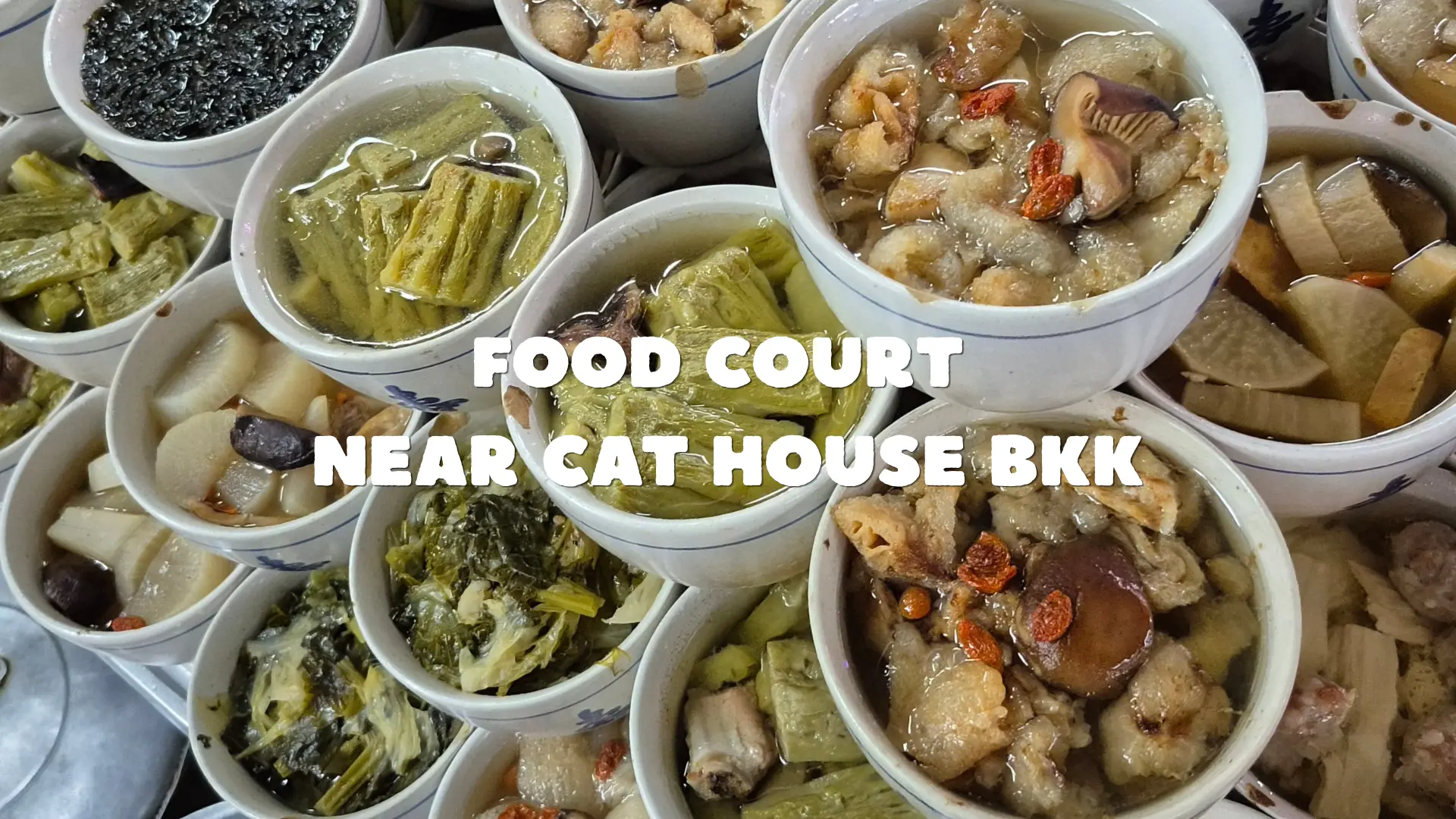
Bangkok is often described through temples, shopping malls, and nightlife — but this version of the city exists beneath the surface. This slow 3-day, 2-night Bangkok itinerary is designed for travelers who want to experience canals, creative neighborhoods, and real local life without rushing or following mass tourism routes. Starting and ending in Silom at Cat House BKK, this guide focuses on movement, atmosphere, and texture rather than checklists, showing a side of Bangkok many visitors never see.
DAY 1 — Rail nostalgia + forgotten canals + creative warehouse night
Start → End: Cat House BKK → Hua Lamphong Railway Station → Electric Boat on Khlong Phadung Krung Kasem → Nang Loeng neighborhood / Market → Ban Bat Community → Phra Athit Road → Khlong Bang Lamphu → Cat House BKK (Silom)
Transport logic (Cat House BKK → Hua Lamphong)
- Option A (best): MRT Sam Yan → Hua Lamphong (fast, predictable)
- Option B: Grab/taxi directly (easy if you leave early)
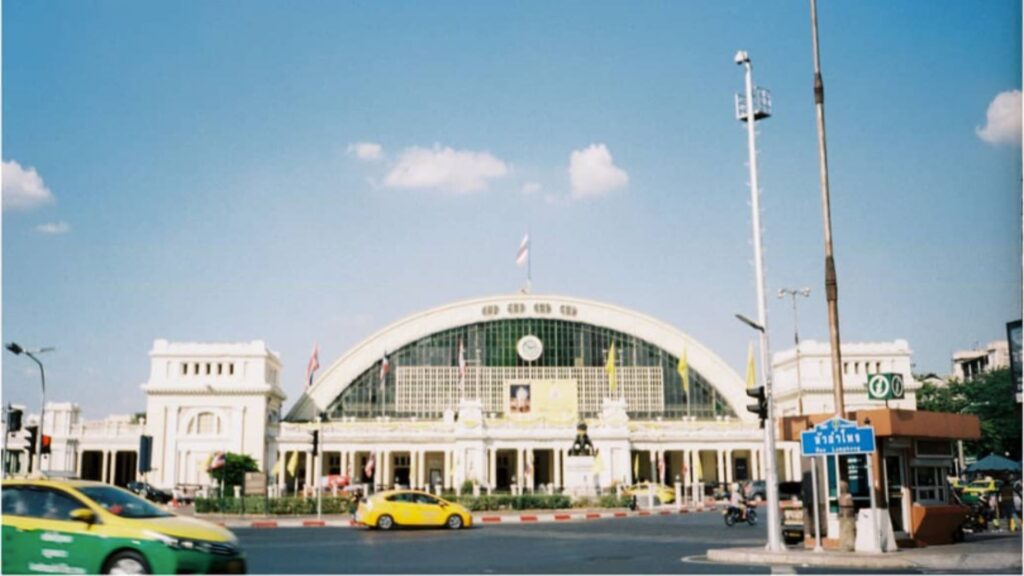
Stop 1: Hua Lamphong Railway Station (สถานีรถไฟหัวลำโพง)
Recap:
- Go early for quiet + best light
- Walk the main hall + platforms
- This is “Bangkok memory,” not a tourist show
Hua Lamphong is one of the best places in Bangkok to start a trip if your goal is to feel the city, not just consume it. It’s a landmark, yes, but not in the “must-take-a-selfie” way. It’s a landmark in the sense that it represents an older Bangkok: one that moved at a slower rhythm, where travel had ceremony, waiting had dignity, and architecture was built to make public life feel important. When you walk into Hua Lamphong, you can sense that it was designed to be a civic room — a grand indoor space that holds the noise of the city and turns it into an echo. Even if you don’t know anything about its history, your body understands the atmosphere: the high ceiling, the symmetry, the way the light spreads and softens across the hall. This is one of the rare “breathing spaces” left in central Bangkok.
The best way to experience Hua Lamphong is to treat it like a film set where nothing is staged. Don’t rush in for one photo and leave. Walk slowly. Look at the signage, the counters, the edges — all the parts that modern buildings try to hide. Notice how people move: commuters in practical clothes, staff who know the building like muscle memory, visitors who speak quietly because the space almost demands it. If you come early, you’ll avoid the thickest flow of people and you’ll get the kind of calm that makes this place feel special rather than stressful.
Why does this stop matter for your itinerary? Because it frames Bangkok as a city of layers, not a city of attractions. Most mass tourism itineraries begin with something loud: malls, famous temples, market chaos. Starting at Hua Lamphong does the opposite — it gives you a quiet introduction that makes you more observant for the rest of the trip. It also sets up the canal story perfectly. Rail and canals are both “movement infrastructure,” and Bangkok’s identity has always been about movement: water routes, trade routes, migration routes, and daily commuting routes. Hua Lamphong is the perfect mental bridge between modern transit and the older water-based city you’re about to see. Think of it as the prologue to your canal chapter.
Stop 2: Electric Boat on Khlong Phadung Krung Kasem (เรือไฟฟ้าคลองผดุงกรุงเกษม)
Recap:
- Board near Hua Lamphong area
- Quiet electric boat (less noise, more observation)
- Treat it as “hop-off exploration,” not just a ride
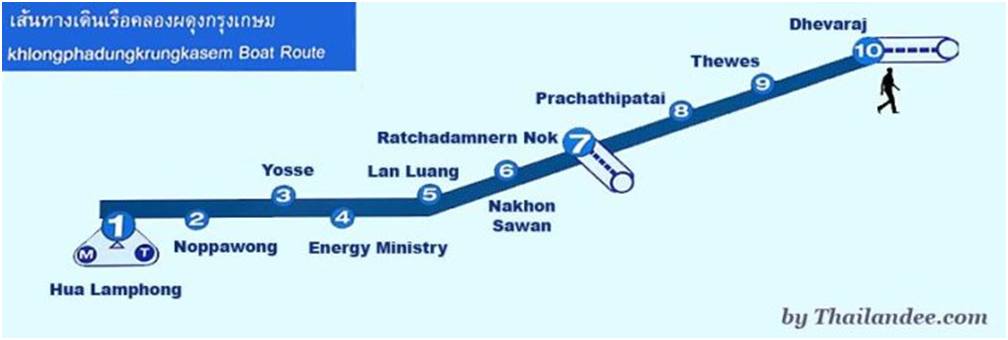
Taking the electric boat along Khlong Phadung Krung Kasem is one of those Bangkok experiences that feels “insider” not because it’s secret, but because most visitors simply don’t realize it exists. The canal itself is historically important, yet it doesn’t shout for attention. That’s exactly why it’s powerful. In Bangkok, where sensory overload is the default, a quiet canal ride becomes a kind of reset button. You’re suddenly moving through the city without the constant engine roar, without the aggressive lane switching, without the feeling that the city is trying to sell you something every second. The electric boat glides. That changes the way you notice things.
This canal route shows you Bangkok from the side — the “backstage” perspective. Buildings that look modern from the road have hidden faces on the canal: service doors, small shrines tucked into corners, plants growing wherever they’re allowed, families living in narrow strips of space that still hold personality. You pass under bridges that feel like thresholds between neighborhoods. You see a different version of the city’s economy: not just storefronts and billboards, but logistics, residential edges, and everyday routines. The canal is not a museum. It’s a working corridor, and that’s the point.
The best mindset is to treat the canal as a linear neighborhood that you’re traveling through, not as a “tour.” Hop off when something catches your eye. Walk five minutes. Eat something small. Get back on when you’re ready. That unstructured, responsive style is the most authentic way to use Bangkok’s waterways, because historically that’s exactly what they were: connectors and arteries. You also get a break from walking without losing the sense of exploration. It’s the ideal compromise for a short trip: low effort, high texture.
Why does this stop matter? Because it teaches you how to read Bangkok. Roads show you the city’s “front” — its official face. Canals show you its “real” face — the improvised, lived-in, patched-together Bangkok that locals interact with daily. Once you’ve done this canal ride, you’ll understand why Day 2 (Thonburi canals + Artist House) hits deeper. You’re not just doing “another canal thing.” You’re building an understanding of the city’s structure. It turns the itinerary into a narrative rather than a list.
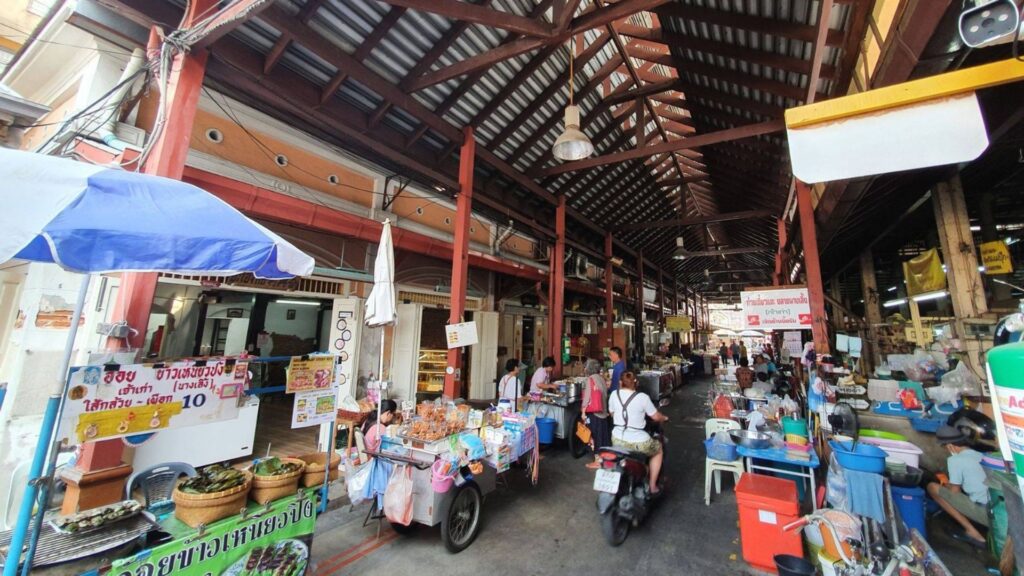
Stop 3: Nang Loeng neighborhood / Market (ตลาดนางเลิ้ง)
Recap:
- Old Bangkok community energy, not staged
- Eat where locals queue
- Great for slow snack-crawl
Nang Loeng is the kind of place that rewards travelers who are willing to be slightly uncomfortable — not physically, but mentally. You won’t get neat explanations. You won’t get a curated “welcome.” You’ll get a living neighborhood that continues whether or not you are there. That’s the magic. Nang Loeng is often described as “old Bangkok,” but that label can be misleading because it implies something preserved and static. Nang Loeng is not static. It’s a community that has adapted for decades while holding onto its own internal logic — a place where family-run businesses, long-standing food stalls, and local routines still organize the area more than trends do.
Walking through Nang Loeng feels like moving through a compressed city history. The shophouses, alley layouts, and neighborhood density tell you how Bangkok once grew: not by mega-projects, but by clustered human needs. Here, food is not a product strategy — it’s continuity. Many stalls serve dishes that exist because they’ve always existed, refined through repetition. You’ll see people ordering without menus, vendors working with silent speed, and customers who look like they’ve been coming here since childhood. As a visitor, your job is simple: observe. Where do people cluster? What sells out quickly? Which stall has the longest “low-drama” line? That’s your guide.
What makes Nang Loeng special for your itinerary is that it’s “Bangkok without performance.” It doesn’t feel like a tourist market, and it doesn’t try to become one. That means the atmosphere stays honest — which is rare in a city that has so many areas designed to be photographed. If you want something truly memorable, don’t rush for a single famous dish. Instead, do a snack crawl: buy one small item, walk a bit, buy one more. Sit somewhere quiet. Watch how people move. This is the kind of travel experience that doesn’t look dramatic in photos but stays dramatic in memory.
And it matters because it balances the day. Hua Lamphong gives you atmosphere; the electric boat gives you perspective; Nang Loeng gives you human-scale intimacy. It completes the “movement infrastructure” theme by reminding you what movement is for: daily life, food, family, small business survival. It’s also a relief from the cliché Bangkok narrative. You leave with the feeling that you discovered something real — not because it’s unknown, but because you experienced it on its own terms.
Stop 4: Ban Bat Community (ชุมชนบ้านบาตร)
Recap:
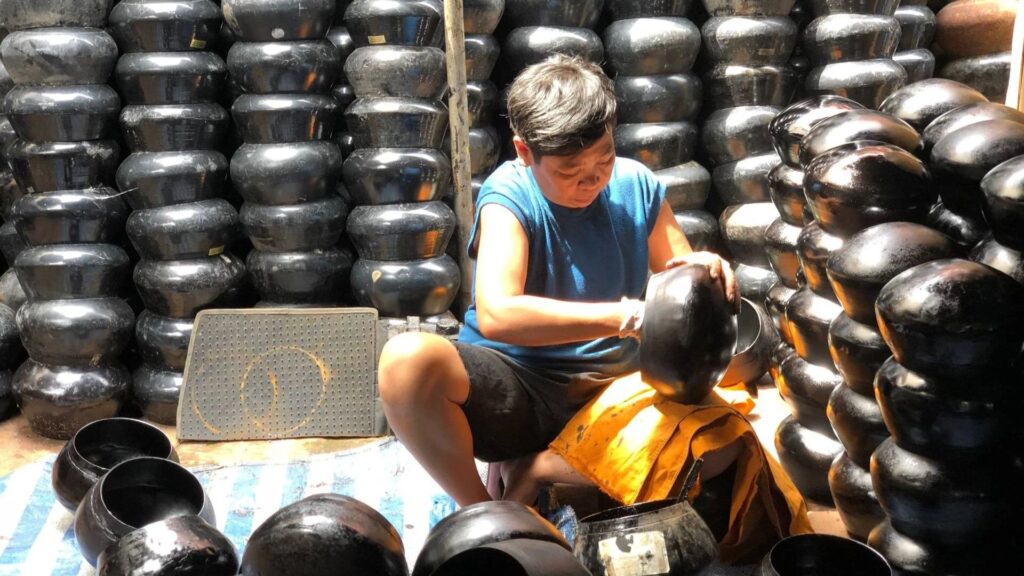
- Tiny craft community
- Monk alms-bowl making tradition
- Be respectful; observe quietly
Ban Bat is one of those places that can easily be overlooked because it doesn’t “advertise” itself. And that’s exactly why it belongs in this itinerary. It’s not a place you go to be entertained; it’s a place you go to witness a tradition that is still functional. Ban Bat is known for making monks’ alms bowls — objects that remain central to Buddhist daily life. In many places, you’d expect this craft to be relegated to a museum demonstration. Here, it exists as work. That difference is everything.
When you enter the neighborhood, the scale shifts. Bangkok suddenly feels small, close, textured. The lanes, the workshops, the sounds of tools — it’s intimate. You may hear metal being shaped, see pieces of bowls stacked, notice soot marks, water buckets, and the kinds of practical details that tell you: this is not aesthetic; this is production. There’s something deeply grounding about watching skilled labor that has clear purpose. In a modern city full of digital abstraction, Ban Bat is physical reality: hands, heat, repetition, patience.
The key to enjoying Ban Bat is to go in with the right behavior. Don’t treat it like a zoo. Don’t block walkways. Don’t insist on photos in someone’s face. The respectful approach is to look, step aside, look again. If you’re invited in, go. If not, observe from the edge. This kind of etiquette isn’t just politeness — it’s what keeps communities like this from being overwhelmed by tourism. When visitors behave well, the craft can continue without being distorted into performance.
Why does Ban Bat matter in the structure of your trip? Because it deepens the canal day into something culturally meaningful without turning it into a temple checklist. You’re seeing Bangkok’s spiritual life through its material culture — the objects used in daily religious practice — rather than through big monuments. It’s a different angle, and it aligns with your “not mass attraction” rule perfectly. You leave understanding that Bangkok’s identity isn’t only about what it displays; it’s also about what it makes.
Evening: Phra Athit Road Walk & Khlong Bang Lamphu (Soft Night, Food & Old City Air)
Transport Logic: Ban Bat Community → Phra Athit Road
After finishing at Ban Bat Community, move toward the river-facing Old City for an evening that is walkable, calm, and atmospheric.
Option: Taxi or Grab (Recommended)
- 5–10 minutes by car depending on traffic
- Direct, simple, and avoids confusing bus routes
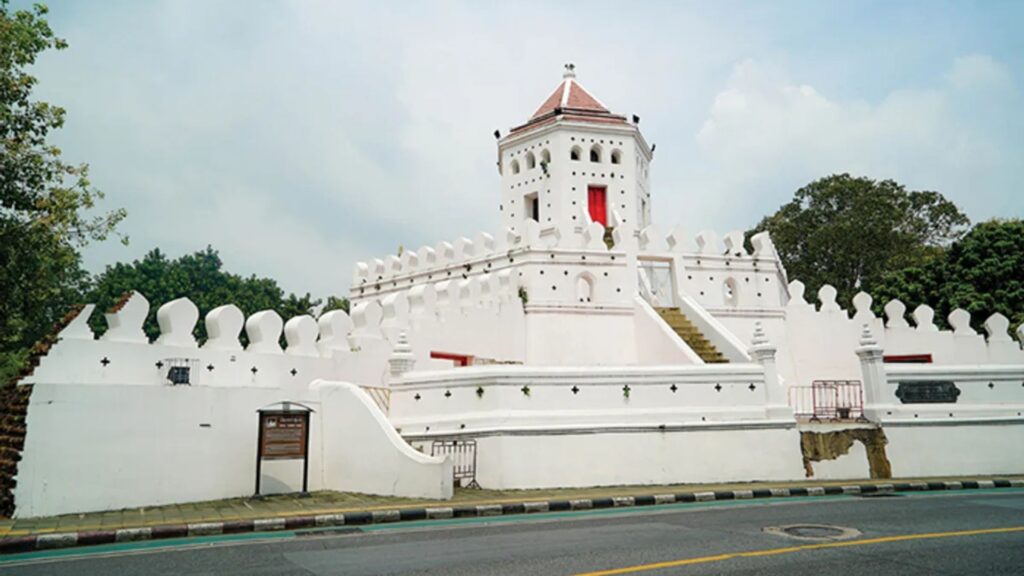
- Drop-off point: Phra Athit Road area near Phra Sumen Fort
Public transport is possible but inefficient for this short distance. A quick taxi preserves energy for walking, which is the core of this evening experience.
Why Phra Athit Road in the Evening
Phra Athit Road is one of the rare Bangkok streets that becomes gentler at night instead of louder. While nearby Khao San fills with noise and crowds, Phra Athit shifts into something more reflective: riverside air, low-lit cafés, quiet conversations, and locals walking without urgency.
This area works beautifully after a day focused on craft, history, and everyday life. It doesn’t shout for attention. Instead, it invites slow movement — walking without a plan, stopping when something feels right, sitting when your legs ask for it. That pacing is intentional. This itinerary is not about collecting landmarks; it’s about letting Bangkok’s atmosphere accumulate.
Evening Walk: Phra Athit Road to Khlong Bang Lamphu
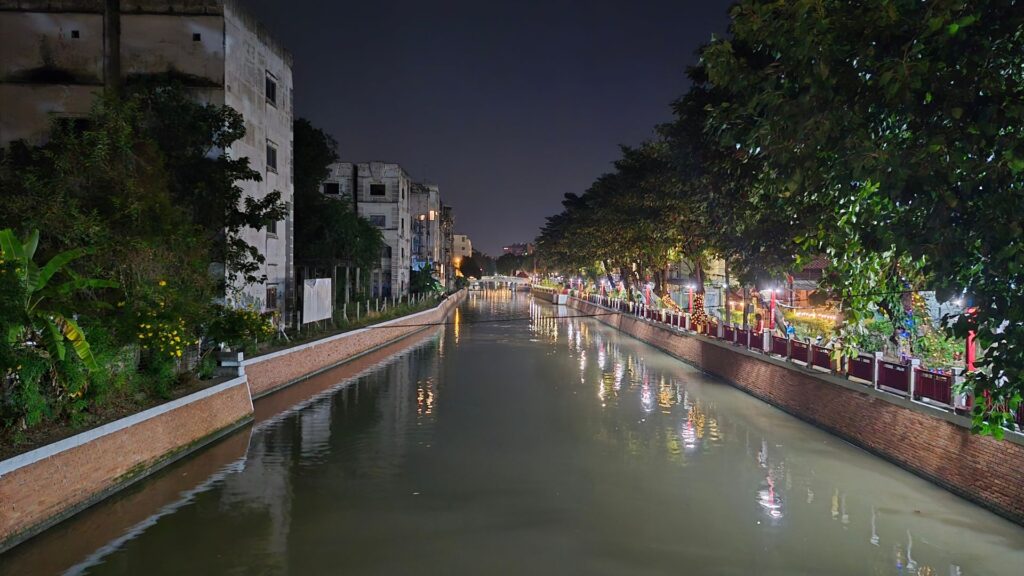
Start your walk along Phra Athit Road, moving at an unhurried pace. You’ll pass:
- Small cafés tucked into old shophouses
- Quiet bars with outdoor seating
- People sketching, reading, or talking softly
From there, continue toward Khlong Bang Lamphu, one of the Old City’s most underrated canal walks. In the evening, the canal reflects streetlights and passing silhouettes, creating a calm, almost cinematic feeling. This is not a designed promenade — it’s a lived-in space where daily life continues quietly after sunset.
Walking along the canal gives context to everything you saw earlier in the day. Bangkok’s canals aren’t just history; they’re still part of how the city breathes.
Where to Eat (Casual, Local-Friendly)
Phra Athit Area Food Options
- Small Thai restaurants serving stir-fries, rice dishes, and soups
- Old-school noodle shops tucked behind the main road
- Cafés offering simple Western-Thai fusion if you want something light
This is not a destination for “must-eat” lists. It’s a place where you eat because you’re there — which is exactly why it works.
Drinks (One or Two, Not a Bar Crawl)
Phra Athit’s strength is quiet drinks, not nightlife.
- Riverside-facing bars with outdoor seating
- Jazz or soft background music instead of DJs
- Spaces where you can hear the river and your own conversation
One drink here feels like a pause, not an event — which fits the tone of Day 1 perfectly.
That progression matters. It teaches travelers that Bangkok isn’t only exciting when it’s loud. Sometimes it’s most powerful when it’s quiet, textured, and slightly dim.
Ending Day 1 this way also prepares the mindset for Day 2’s Thonburi canals and Artist House. You stay in a contemplative rhythm instead of breaking it with nightlife energy.
Way Back: Phra Athit Road → Cat House BKK (Silom)
Taxi or Grab (Recommended)
- 25–35 minutes at night
- Direct ride back to Silom
- Easy, safe, and efficient after an evening walk
Avoid late-night buses here — simplicity keeps the itinerary elegant.
DAY 2 — Thonburi canal soul + Artist House + low-key riverside evening
Start → End: Cat House BKK → Khlong Bang Luang → Artist House (Baan Silapin) → Tha Din Daeng Market area → Cat House BKK
Transport logic (Cat House BKK → Khlong Bang Luang / Artist House)
- BTS Sala Daeng → Bangwa, then change to MRT stop at Bangpai then short walk to canal area
Stop 1: Khlong Bang Luang (คลองบางหลวง)
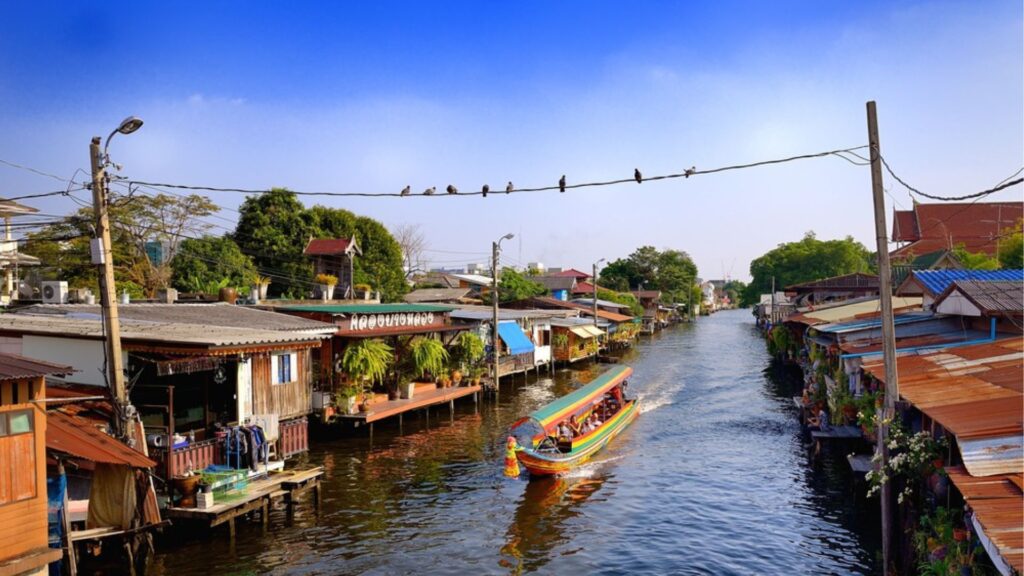
Recap:
- Traditional canal neighborhood
- Walk bridges, watch daily life
- Slow pace, not “attraction hopping”
Khlong Bang Luang is where Bangkok stops feeling like a capital city and starts feeling like a water village that somehow survived time. This is Thonburi — the older side of Bangkok, where canals still function as living edges rather than decorative remnants. The most important thing to understand is that the value of Khlong Bang Luang is not located in one “spot.” It’s in the in-between: the short wooden walkways, the small bridges, the corners where plants spill over railings, the way houses face the water as if the canal is the main street (because historically, it was).
This area is designed by necessity, not aesthetics. That’s why it’s beautiful. You’ll see how people use space efficiently: tiny balconies, improvised shade, objects stored in ways that make sense for flood seasons and daily routines. You’ll also notice the social closeness — neighbors are near enough to talk across water. This is a very different urban feeling from Sukhumvit or Siam. It’s quieter, more intimate, and less transactional.
The best activity here is simply walking with intention. Don’t try to “cover” the area. Instead, pick a direction, walk until something feels interesting, stop, then continue. Bring a camera if you like texture photography — wood grain, reflections, small shrines, aging paint, cats, and plants. But don’t turn it into a photo hunt. The point is to settle into the rhythm of canal life. Sit at a canal-side café and just watch. Let boats pass. Notice how sound travels differently here — softer, more layered.
Why this stop matters: it’s the emotional heart of the itinerary. Many travelers leave Bangkok saying they saw “temples and malls.” Khlong Bang Luang gives you a different story: you experienced a living neighborhood that doesn’t exist to impress you. It also helps you understand Bangkok’s original identity as a water city, which is the deeper thread connecting your whole trip — from the electric boat canal on Day 1 to Thonburi canal life on Day 2.
Stop 2: Artist House (Baan Silapin) — บ้านศิลปิน
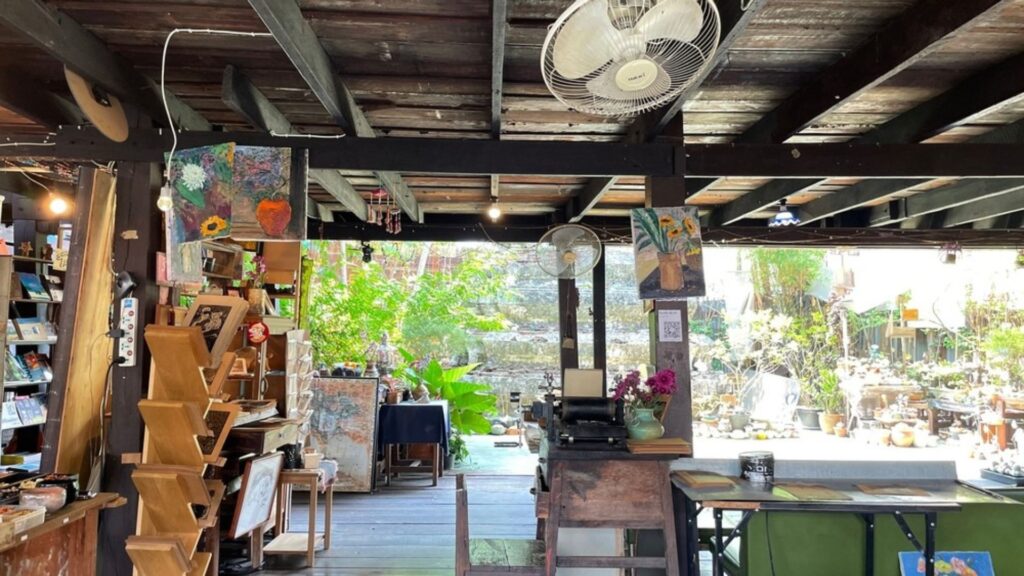
Recap:
- 200-year-old wooden house
- Living art space
- Sit, watch, arting, don’t rush
Artist House (Baan Silapin) is one of the most quietly special places in Bangkok because it doesn’t behave like a destination. It behaves like a living room that happens to welcome strangers. The building itself — a traditional wooden canal-side house — carries the weight of time in a way you can feel physically. The floorboards, the beams, the shape of the space: everything tells you that this structure wasn’t built for modern convenience. It was built for airflow, community, and water-based living. When you enter, you don’t get the polished “museum tone.” You get warmth, messiness, authenticity — which is exactly why it works.
The art aspect is real, but it’s not a commercial gallery atmosphere. It’s closer to a community ecosystem: artists working, objects being made, visitors browsing, kids sometimes appearing, and the canal doing its calm background role. What makes it memorable is the permission it gives you to slow down. Bangkok can push you into constant decision-making — where to go next, what to buy, what to photograph. Artist House removes that pressure. You sit. You watch. You become a witness to a place that exists even when you’re not there.
If you’re lucky, you’ll encounter performances or demonstrations that feel organic rather than scheduled. But even if nothing “happens,” you’ll still leave satisfied — because the value isn’t event-based. It’s atmosphere-based. This is important: do not measure Artist House by productivity. Measure it by how calm you feel after being there. That’s its gift.
Why does it matter in your itinerary? Because it becomes the defining “Bangkok memory” for many people — the one place that doesn’t fit into the usual travel categories. It’s not famous enough to be crowded, not hidden enough to be inaccessible, and not commercial enough to feel fake. It’s exactly what you asked for: unique, local, and deeply Bangkok — especially because Thai travelers and creatives often appreciate it more than international tourists do.
Evening Loop: Tha Din Daeng Market (Local Street Food & Old-School Flavors)
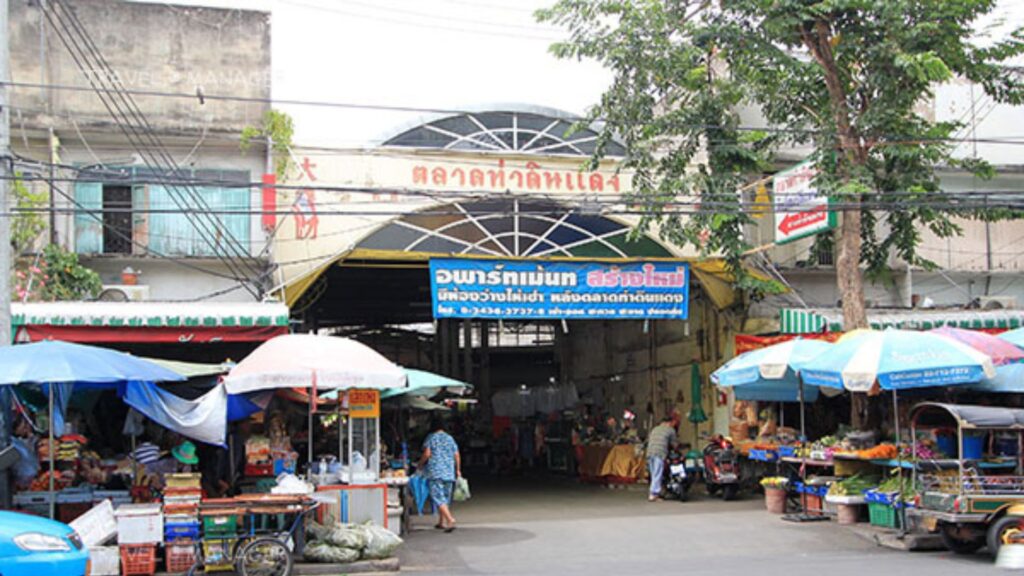
Transportation
After finishing at Artist House, continue the evening deeper into local Bangkok by heading to Tha Din Daeng, one of the most authentic food neighborhoods on the Thonburi side.
From Artist House to Tha Din Daeng Market
- Taxi or Grab is the simplest and most comfortable option
- Travel time: 15–20 minutes, depending on traffic
- This route stays entirely on the Thonburi side, avoiding river crossings and keeping the evening relaxed
Walking or public transport is not recommended here — the charm of Tha Din Daeng is wandering freely once you arrive, not navigating transfers beforehand.
Why Tha Din Daeng in the Evening
Tha Din Daeng is one of those Bangkok neighborhoods that still feeds locals first. In the evening, the streets come alive with grills, noodle steam, and small family-run stalls that have been cooking the same dishes for decades. This is not a night market built for photos — it’s a real neighborhood food zone, busy, fragrant, and deeply satisfying.
Coming from Artist House makes sense geographically and thematically. You move from canal-side creativity and traditional crafts straight into everyday Bangkok food culture, without jumping back to a commercial district in between.
What to Eat
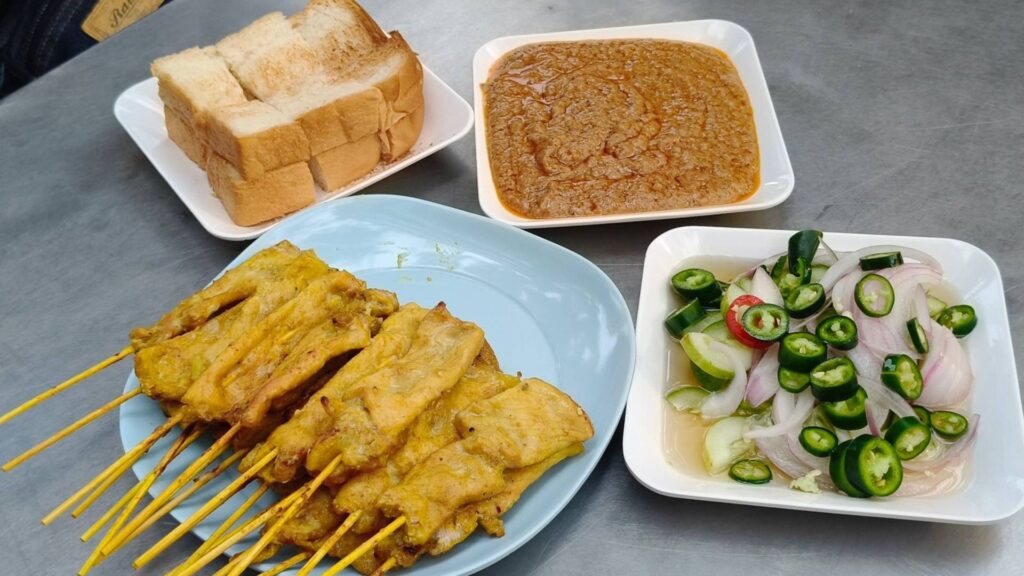
Moo Satay (หมูสะเต๊ะ Tha Din Daeng)
Tha Din Daeng is especially well known for its moo satay, grilled over charcoal until lightly smoky, served with thick peanut sauce and ajad. Several stalls sell only satay; look for queues of locals in the early evening.
Egg Noodles & Pork Noodles
Classic ba mee moo daeng and ba mee moo krob dominate this area. Expect springy egg noodles, clean broth, and generous portions of red pork and crispy pork — unfussy and deeply satisfying.
Crispy Pork (Moo Krob)
Many vendors here do moo krob properly: blistered skin, juicy meat, chopped to order. Some stalls serve it over rice, others with noodles. Follow the sound of chopping and sizzling.
Optional Snacks
- Fried taro or sweet potato
- Chinese-style dough fritters
- Herbal drinks or iced chrysanthemum tea
How to Eat Here (Local Rhythm)
Tha Din Daeng is best experienced slowly and informally. Walk, stop where it smells good, eat small portions, and move on. Most vendors are friendly and used to non-Thai speakers — pointing works just fine.
Arrive around 6:30–7:00 PM for the best atmosphere. Many stalls start closing by 9:30–10:00 PM.
Way Back: Tha Din Daeng to Silom (Cat House BKK)
After dinner, return to Silom using one of these easy options:
Option 1: Taxi / Grab (Recommended)
- Direct ride back to Cat House BKK
- Travel time: 25–35 minutes at night
- Comfortable, door-to-door, and ideal after a full evening of walking and eating
Option 2: Taxi to BTS Krung Thon Buri → BTS Silom Line
- Short taxi ride to Krung Thon Buri BTS
- BTS Silom Line to Sala Daeng or nearby station
- Good option if traffic is heavy, but slightly more effort
For most travelers, Option 1 keeps the evening calm and seamless.
Day 3 — Old Trade Routes: Talad Noi, Chinatown (Daytime), Sampeng & Song Wat at Sunset
Start → End: Cat House BKK (Silom) → Talad Noi → Chinatown (Yaowarat, daytime) → Sampeng Market → Song Wat Road → Cat House BKK (if you return) or your departure point
Transport Logic: Cat House BKK → Talad Noi (Morning)
Start early while the city is still soft.
Option 1: Taxi or Grab (Recommended)
- 10–15 minutes from Silom
- Direct, easy, and ideal for an early start
Option 2: BTS Sala Daeng → BTS Saphan Taksin + short walk/taxi
- Works if you enjoy light movement, but slower
Talad Noi is best before 10:00 AM, when workshops are active and the light is ideal for walking.
Morning: Talad Noi — Old Workshops, Temples & River Edges
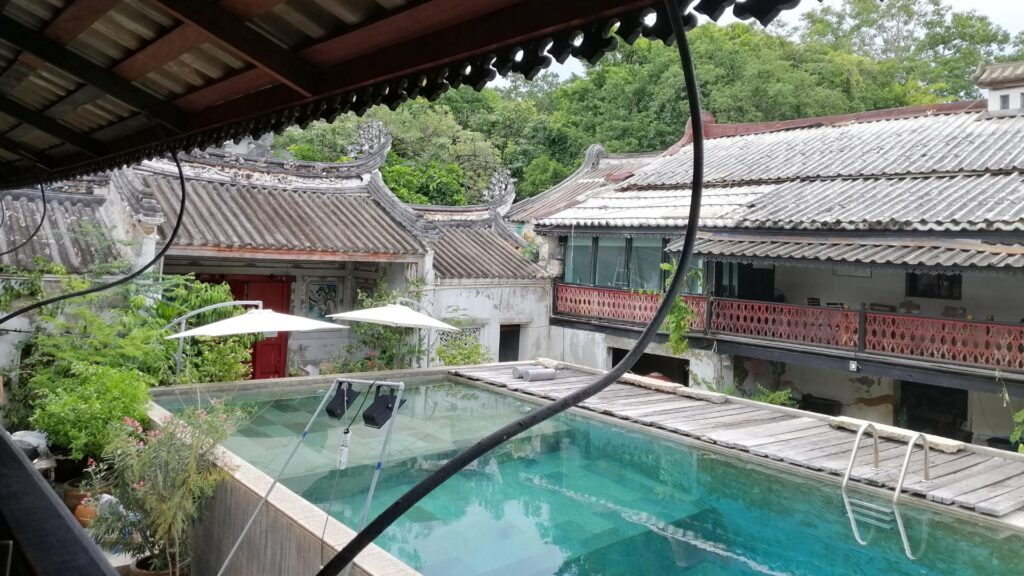
Talad Noi is not a single attraction; it’s a working neighborhood shaped by trade. The streets are narrow, uneven, and full of small-scale industry: metal workshops, engine repair shops, shrines wedged between warehouses, and homes that have barely changed in decades.
Walking here in the morning matters. You’ll hear tools before traffic. Doors are open. People are fixing, cleaning, preparing. This is Bangkok in motion, not performance.
Key things to notice:
- Old shophouses layered with time and repair
- Hidden Chinese shrines and small temples
- River-facing alleys with views of Chao Phraya logistics life
Don’t rush. Talad Noi rewards wandering more than planning.
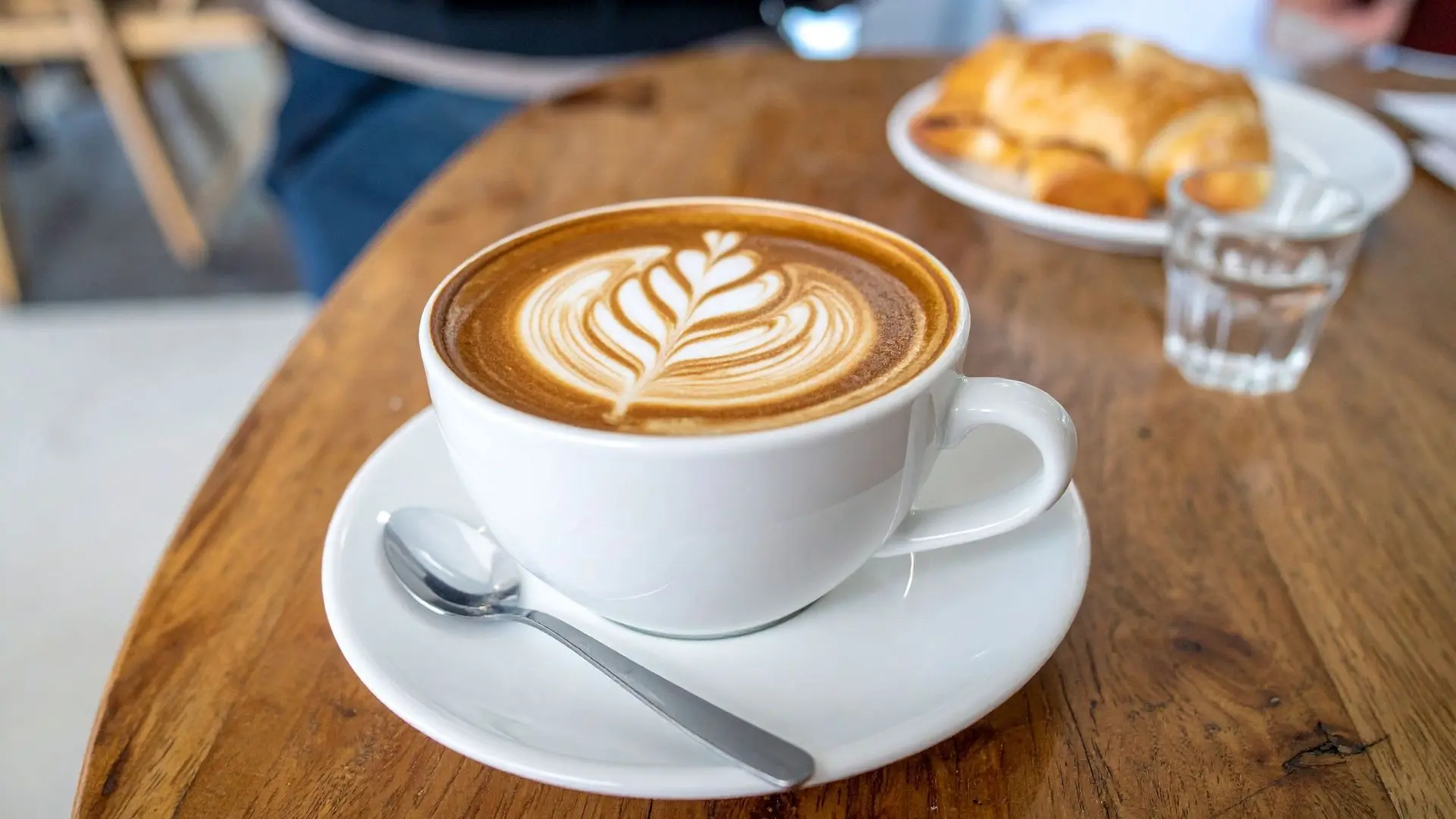
Tips: Best place for morning coffee
Late Morning → Lunch: Chinatown (Yaowarat, Before the Crowds)
From Talad Noi, walk or take a short taxi into Yaowarat.
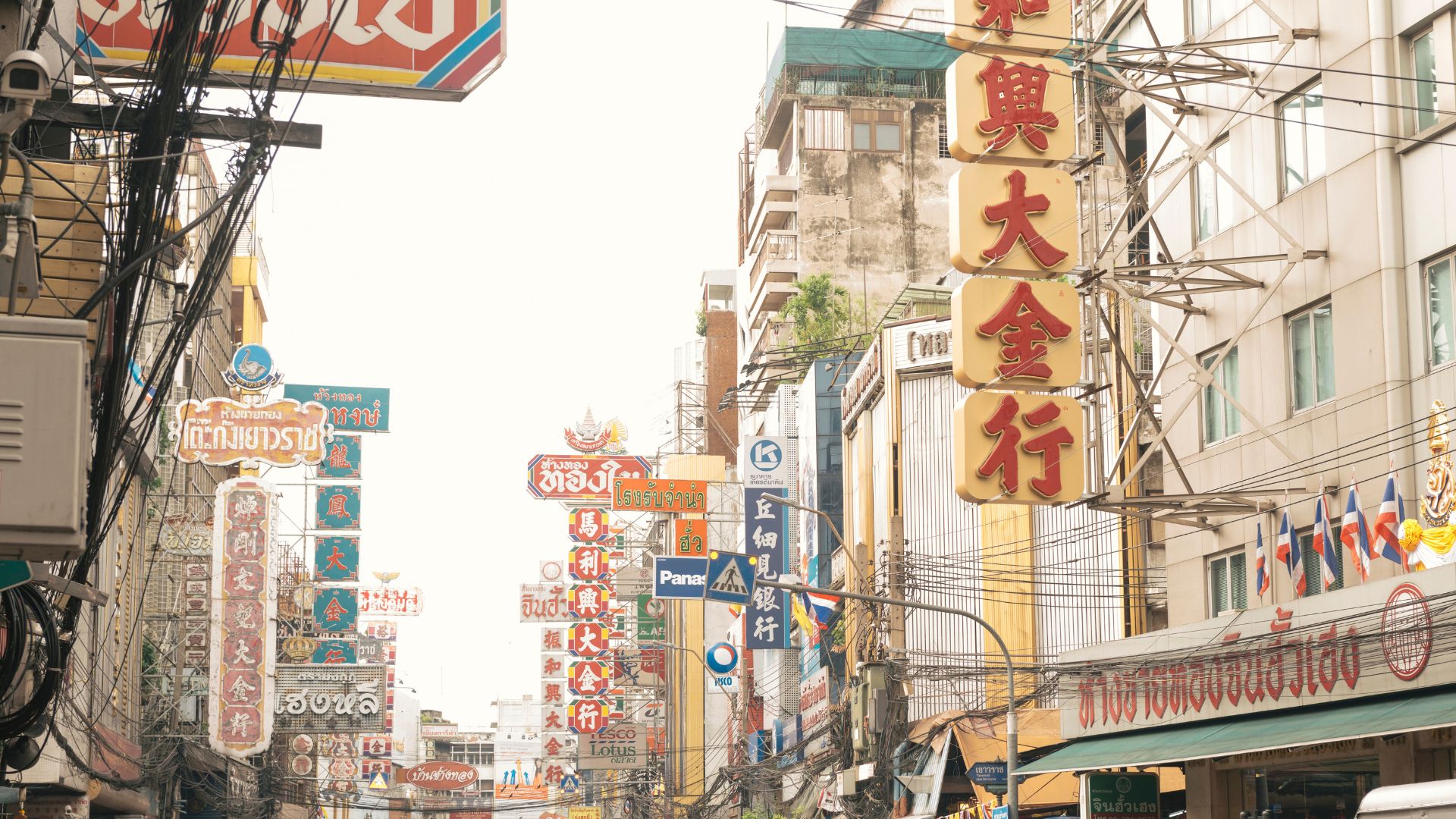
Daytime Chinatown is a completely different place. The neon is irrelevant; what matters are the markets, gold shops, Chinese pharmacies, and food institutions that serve locals long before tourists arrive.
Highlight: Old Markets in Chinatown
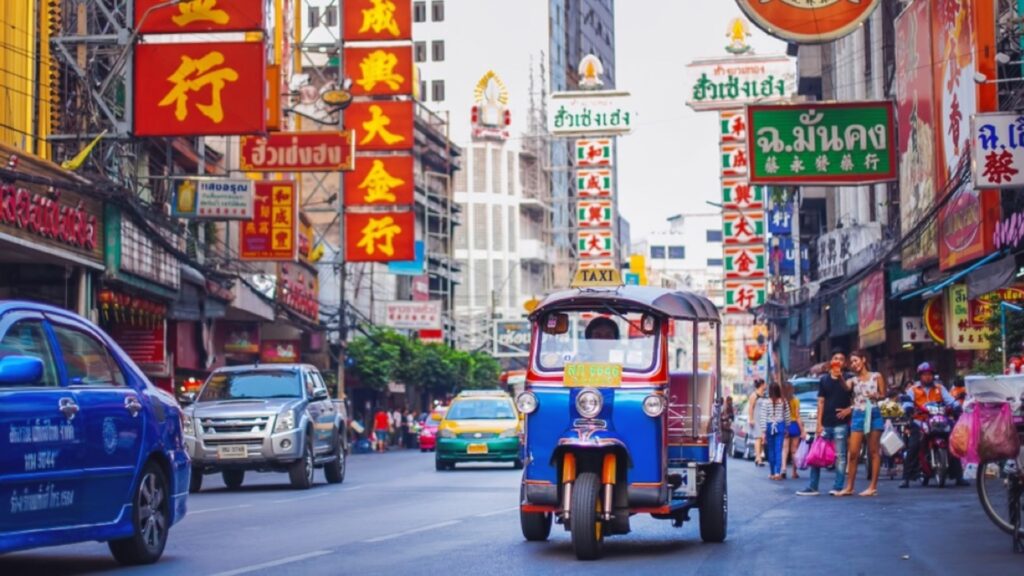
Look beyond the main road:
- Fresh markets selling dried seafood, herbs, mushrooms
- Alleyway vendors prepping ingredients for evening service
- Wholesale food suppliers operating in controlled chaos
This is where Chinatown still functions as Bangkok’s pantry.
Lunch: Chinatown (Choose One Classic)
Lunch here should be purposeful, not endless.
- Noodle shops with short menus
- Roast duck or crispy pork rice
- Old-style Chinese-Thai eateries serving one thing very well
Eating at lunch avoids queues, heat stress, and sensory overload — and keeps the itinerary humane.
Cultural Stop: Wat Mangkon Kamalawat (เล่งเน่ยยี้)
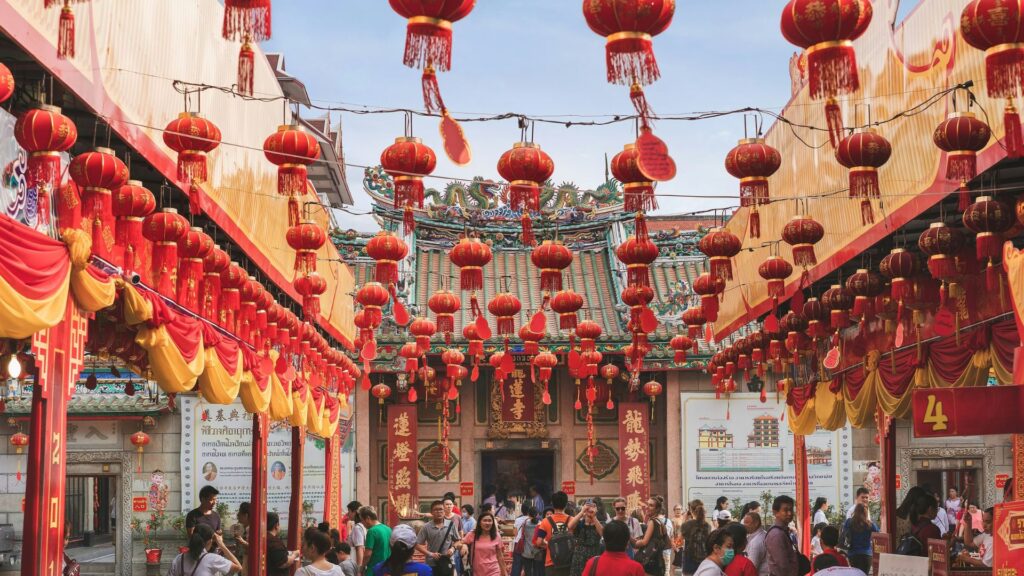
After lunch, walk to Wat Mangkon Kamalawat (Leng Noei Yi), the spiritual heart of Chinatown.
Visiting in the afternoon is intentional. The temple is still active, but less compressed than during peak prayer hours. You can observe incense rituals, fortune-seeking locals, and the layered architecture without feeling rushed.
This stop anchors Chinatown not as a food zone, but as a living cultural center.
Afternoon: Sampeng Market — Trade Still in Motion
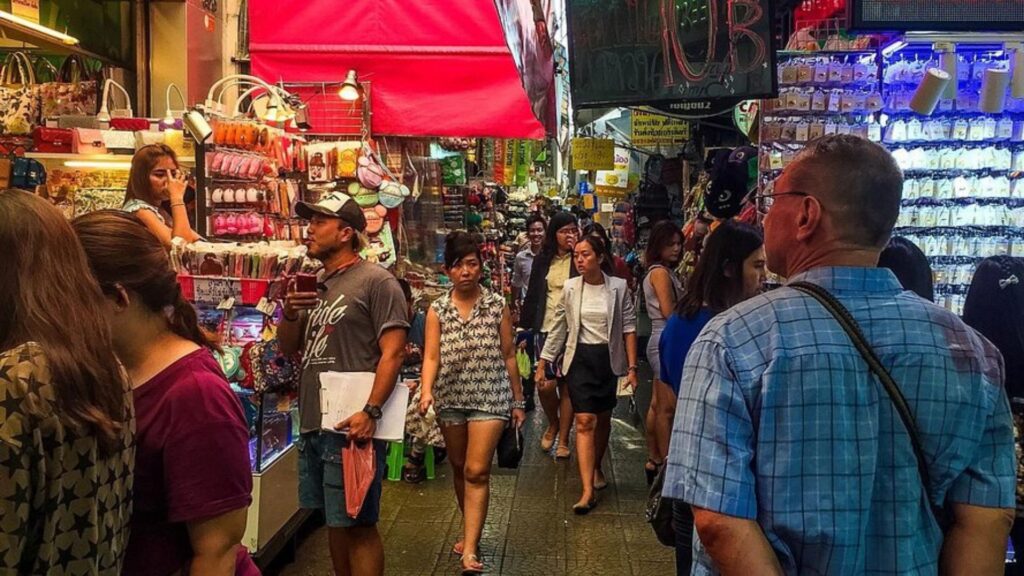
From Wat Mangkon, walk toward Sampeng Market.
Sampeng is not curated. It’s dense, loud, and transactional — and that’s the point. This is where Bangkok’s wholesale energy still lives: ribbons, buttons, toys, bags, household goods stacked to the ceiling.
You don’t come here to buy souvenirs. You come to understand scale — how goods move, how small margins work, how cities supply themselves.
Move slowly, stay alert, and treat it as observation rather than consumption.
Sunset: Song Wat Road — Quiet Creativity by the River
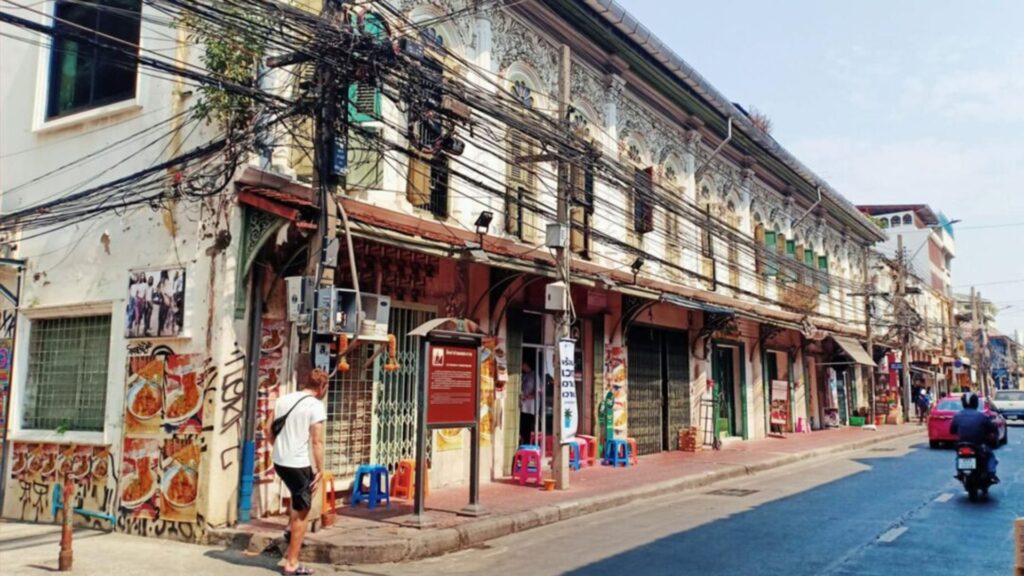
As the afternoon softens, head toward Song Wat Road.
Song Wat is at its best at golden hour, when the river breeze cools the street and cafés begin to glow. The road blends old trading houses with new creative spaces — not flashy, not forced.
This is where the day exhales.
Café Suggestions (Choose One)
- Riverside cafés with outdoor seating
- Small creative cafés focused on coffee and calm
- Spaces designed for sitting, not posting
Order something light. Watch the river traffic. Let the layers of the day settle.
Way Back: Song Wat Road → Cat House BKK (Silom)
Taxi or Grab (Recommended)
- 20–30 minutes in the evening
- Direct return to Silom
- Keeps the final stretch simple and restful
Why This Day Works
This Day 3 doesn’t rush history or romanticize grit. It follows trade routes — river to market to temple to wholesale to café — mirroring how Bangkok actually developed.
By the time you sit at Song Wat Road, you haven’t “done” Chinatown. You’ve understood its rhythm. And that’s a far better ending than chasing neon.
Conclusion: Bangkok, Experienced — Not Collected
This 3-day, 2-night itinerary is not designed to help you “see Bangkok.” It’s designed to help you understand how Bangkok moves, breathes, and layers itself over time.
By starting and ending each day at Cat House BKK in Silom, the city unfolds in a grounded way. You’re not jumping randomly between highlights. You’re following logic — canals that once moved goods, neighborhoods built by craftsmen and traders, streets that still serve locals before visitors, and creative spaces that grow out of old infrastructure rather than replacing it.
Day 1 introduces Bangkok through movement and texture: a historic station, quiet canals, old neighborhoods, and an evening that stays human instead of loud. It establishes the rhythm of the trip — observe first, consume later. Day 2 leans into water, art, and daily life on the Thonburi side, where canals are not museum pieces but part of living communities. Day 3 traces trade routes and cultural continuity, from Talad Noi’s workshops to Chinatown’s markets, temples, and wholesale arteries, ending at Song Wat Road where the past and present sit comfortably side by side.
What ties everything together is restraint. This itinerary deliberately avoids overscheduling, “must-see” pressure, and nightlife escalation. Instead, it leaves space for walking, sitting, noticing, and changing your mind. That’s not a compromise — it’s the point. Bangkok reveals itself most clearly when you allow the city to set the pace.
This is also why mass attractions are largely absent. Not because they lack value, but because they flatten experience. Here, the value comes from sequence: how one place prepares you to understand the next. A canal ride changes how you see a market. A temple visit changes how you hear a street. A quiet café at sunset lets everything land.
If you follow this itinerary, you won’t come away with a checklist. You’ll come away with something better: a mental map of how Bangkok actually works, and the confidence to keep exploring beyond guidebooks. You’ll know which hours feel right, which neighborhoods reward patience, and when to stop for no reason at all.
That’s the difference between visiting Bangkok and spending time with it.
And once you’ve experienced the city this way, it’s hard to go back to rushing.